A New Way of Decluttering

Decluttering Who I’m Not I have found myself writing as I declutter. I’m not writing this blog to attract more people to my website. I’m not writing for SEO. I’m not writing because I adore writing. I’m writing for one reason only: because God told me to. And for years, I ignored Him. So now I’m practicing. My writing isn’t perfect—and I’m okay with that. Marketing gurus may say I’m doing everything wrong. I don’t care. Somewhere deep inside me—or maybe at the intersection between God and me—there are things He wants to pull out. Things that might help someone else. Things that might help me. I don’t have a master plan. I just have a keyboard, a little courage, and a hope that if I’m faithful, something good will unfold—for someone out there, and for me too. Maybe no one will ever read this. Maybe that doesn’t matter. That’s the adventure. So bear with me while I’m honest and raw. Where the Decluttering Really Began About ten years ago, my life blew up. I went through a divorce after 18 years of marriage. If you’ve been married, and you have kids, you know how devastating that is. Everything you hoped and dreamed for your family suddenly feels dead. You grieve.You envy the people who figured it out.You keep going even though you want to crawl into a hole.You feel hopeless, lost, confused—like somehow you’re sliding backward. Amid all that pain is an invitation. An invitation to slow down.To get support.To look at who you are, the decisions you’ve made, what you can learn, and how you can grow. But in the beginning, you can’t see any of that. You only see pain—unending, overwhelming pain. Especially if the marriage was full of pain long before it ended. This is where my decluttering journey truly began. Ironically, it was the same year I started my business. Most people wouldn’t recommend starting a company during a divorce, but for me the timing was strangely perfect—divinely orchestrated. While I was learning the organizing business, I was also thrown into the healing business. Did I need another therapist? A support group? Medication? To run away? (Honestly, that one sounded great, but it wouldn’t have helped in the long run.) Learning to Think Differently I don’t know if I’ve always been this way, but lately I’ve found myself more open to new ideas. Actually—no, that’s not true. I was not always this way. My world used to be very black and white. I’m wrong, you’re right.This is the right way, that way is bad. That rigid mindset didn’t help my marriage, and it certainly didn’t help me. But over time, I began to shift. In exploring different philosophies, theologies, and healing methodologies (so many rabbit holes…), I began to see things in a new light. And all those rabbit holes led me to a few simple conclusions: You might be thinking, Gurl… you promised me decluttering and now you’re off in the cosmos. I know. It’s a long build-up. Hopefully a somewhat entertaining one. Decluttering Who I’m Not If I already have everything I need inside me, then my job isn’t to become someone else—it’s to let go of everything that is NOT me. That is a radical change from striving to become who I want to be. To declutter the things I’ve picked up along life’s bumpy road that weigh me down:• trapped emotions• lies I believe about myself• fear-based patterns• mental constructs built to keep me “safe” but actually keep me stuck Just like in organizing, life requires letting go. And just like in organizing, letting go is rarely simple or quick. But it’s so worthwhile. Isn’t it interesting that what I do in people’s homes is exactly what I needed to do in my soul? God’s got a sense of humor. For most of my life, I believed I wasn’t good enough. I thought I had to work harder, try harder, strive, strive, strive. It was exhausting. Self-help books, Bible studies, retreats, speakers—they all offered steps to crawl out of my hole and “become” who I wanted to be. Everywhere I turned, someone was telling me how to achieve my goals and dreams. So I chased.And I got really, really busy. We don’t want to stay stuck in pain. We want to grow. But sometimes we chase growth the way we chase clutter: adding more, doing more, forcing more. The Shift: Realizing I Already Had Enough Everything changes when you realize: You are already enough. Right now. As you are. I now believe I have everything I need inside me. When the barriers are removed—the fear, the shame, the false stories—you naturally become the person you want to be. The true you is what’s left. You don’t have to manufacture love, patience, or worthiness. You simply are those things when the junk is removed. The path to that place is simple, but not easy:releasesurrenderdeclutteringforgivingletting go There is no shortcut.You must go through. But on the other side?Peace.Beauty.Joy.Happiness.Love.Fulfillment.Excitement.Awe. It was all there the whole time.It’s who we are.We just had some blockers. A Beautiful Time to Heal Thankfully, we’re living in a time where there are countless gifted, loving people offering tools and methodologies to help us heal. It truly is a unique moment in history. And for me, this is the real decluttering:not the closets, not the kitchens—but the soul. While I help others with this journey, I’m on it as well. It is not a destination; I have not “arrived” – even when my perfectionist self wants it to be that way. I am able to support my clients with tools I have practiced and wisdom I have gained. What a privilege. Letting go of everything I’m not so I can finally make space for who I truly am.
Listening as Leadership: What Organizers Often Miss

I’ve been thinking more about listening in the last couple years. I want to be a better listener. Honestly, I’m finding it a hard thing to learn. I’d like to think I’ve made improvements, but well, I’m not sure I have. Some people think listening is hearing. It’s not. Good listening is a deep practice. If done well, the person feels heard. That’s so important. Have you ever had someone hear what you’ve said but they’re not looking at you or don’t respond to you? When you ask them what you said, they can regurgitate the words, but you feel unfulfilled in the interaction and unheard? I know how it feels not to feel heard. It hurts. It impacts the relationship too. Usually not for the better. One of my mentors asked the question, “are we listening to understand or respond?” Wow. That’s totally different. If I’m listening to respond I may interrupt you. I might miss what you are saying because I’m formulating my response in my head. I am just waiting until you’re done talking so I can speak. In listening to understand, I’m going to ask more questions. I’m going to be quieter. I’m going to let there be a pause when you’ve finished a sentence. I’m going to be 100% focused on you. Is there something they’re not saying? What’s under the surface? What’s their body language saying? I’m practicing this. I am by no way an expert. I’m just wanting to grow in it. Actually, the place I’m at is awareness. I’m not even sure I’ve grown. I’m just aware that I listen to respond more than listen to understand. Another aspect of listening is judging while listening. If you disagree with them, are you really listening if you’re just waiting to make your next point… to help them see YOUR point of view? I mean, you’re right – obviously – it’s your job to help them see it. Right? Instead of listening, we might be focused on trying to be heard ourselves. In my business I have an acronym for my organizing process: LIBERATE. L is for listen. It’s where I start. I need to listen to what my clients want and need out of the process and for each space, then I can help them with their intentions. It’s critical to the whole process. I have to start with listening and learning. What if our goal in listening was to be curious? Is part of good listening asking questions? I ask my clients a lot of questions. It’s their stuff, it’s their choices. Oftentimes clutter is indecision. People either don’t want to decide or don’t know how to. Sometimes I ask questions because I want my clients to come to the conclusion I think is best. (Just being honest.) This is not what I want to do. I want to ask questions to help them make a decision they feel good about. I once had dinner with my daughter that really highlighted this for me. She was having some struggles with friends. We spent the whole dinner talking about these. Mostly I just asked questions and affirmed her feelings. Later she commented on how great our time was. I hadn’t talked about me at all. But she felt better because she felt heard. I didn’t try to fix her problems (God help me – I insert my advice all too often with my children). I was happy she enjoyed our time together. I work with a lot of couples. Shockingly they are not on the same page about their space, how they want it used, or maintained. This provides a challenge. Ideally, I’d like them to have a discussion and come up with some creative, compromising solutions, however that’s not how it goes too often. Relational stress only adds to the clutter stress they already feel. In a world where people are quick to give their opinions, especially on social media, would it be valuable to check in with ourselves and our listening intentions? Where can we improve? How can we become more aware of our interactions with others and how it’s impacting our relationships? I would be remiss if I didn’t also mention the person we most often listen to the least. Ourselves. This might be your body – your ankle hurts but you went and ran 3 miles anyway. It could be you got invited out to an event you don’t want to attend, but you said yes and think you “have” to go. You’re not really listening to you very well. When we don’t listen to ourselves, we can’t show up for others with our authentic self and with our needs met. If you’re like me and want to improve your listening – it’s a skill we can grow in after all -here are some possible next steps: See if anything starts to change in your relationships. Are they more intimate? Do friends and family start to reach out to you more? Do you feel more connected to them? Remember, it’s a journey. It takes a caterpillar about 2 weeks to become a butterfly. Transformation doesn’t happen overnight. If we’re practicing this to show up better in our relationships, that should include the relationship with yourself. Be nice to yourself.
The Real Work: 10 Years of Learning What Organizing Is Really About

After a decade as a professional organizer, I’ve learned that this work is about so much more than sorting belongings and creating tidy spaces. Here are the ten most important lessons that have shaped both my practice and my perspective. Lesson #1: It’s Not About the Stuff When I became an organizer, I was like many others in this field—I had a natural knack for organization, enjoyed sorting, and genuinely wanted to help people. While these qualities matter, they’re only part of the story. After working with hundreds of clients, I’ve discovered that chronic clutter often has deeper roots in emotions, mindsets, and beliefs. People aren’t just stuck in the clutter in their spaces; they’re stuck with the clutter within themselves. Lesson #2: Habits Are Critical for Long-Term Success I didn’t initially realize how challenging habit formation can be for others. Developing systems and maintaining routines came naturally to me, so I assumed the same was true for my clients. I’ve learned that when clutter has been long-standing, addressing new habits to maintain organized spaces is absolutely critical once we achieve that initial “baseline” organization. Lesson #3: My Client Is Me Even though I don’t personally struggle with clutter, I’ve noticed that my clients and I have far more in common than not. I truly enjoy working with them—they’re incredibly brave to invite me into their spaces and tackle overwhelming situations together. I recognize their stress and overwhelm because I’ve faced my own challenges in different areas of life. Walking my own tough roads has made me more compassionate, understanding and non-judgmental. What a privilege it is to serve as a guide in helping them overcome their obstacles. Lesson #4: Chronically Disorganized Clients Need Long-Term Support How many clients did I organize spaces for, only to see them backslide over the following year? Too many to count. I’m sure some didn’t reach back out, thinking the relapse was their fault—and that breaks my heart. Early in my career, I didn’t adequately address the ongoing support that clients need when they’ve been struggling with chronic disorganization. Lesson #5: I Choose Me I recently had the revelation of “I choose me.” What does this mean? When you’re a “helper,” as I am, you can put yourself last. When those around you are hurting, you want to do whatever you can to help. However, if we’re not properly taking care of ourselves, we don’t have what we need to give. We get signs that we’re doing this, but we ignore them. If you give past what you have, it hurts you. I have a doctorate degree in this—and I’ve noticed so do many of my clients. I’m learning to tune into myself, listen to and honor what I need, and practice being my authentic self. I’m practicing and that’s enough. Lesson #6: Eco-Conscious Clients Became My Teachers There’s a saying: “When the student is ready, the teacher will appear.” I’ve been blessed with an increasing number of environmentally conscious clients who have become both inspiration and teachers for me. Through their influence, I’ve increased my own recycling, composting, and repurposing efforts. This experience has made me a better advisor for disposal and rehoming options with all my clients. I’m not perfect, nor am I trying to be—just making small, meaningful changes along the way. Lesson #7: Understanding Neurodiversity Is Essential You can’t be an organizer without working with ADHD clients—it’s that prevalent and significantly impacts organization. Learning how to effectively support all neurodivergent clients has been both challenging and incredibly rewarding. Understanding neurodiversity has transformed my approach and made me a more compassionate, effective organizer. Lesson #8: AI Can Transform Your Business I started incorporating AI into my practice this past year, and it’s been a game-changer. Recently, I asked it to help write an addendum to my Letter of Agreement—a task that took 15 minutes instead of an hour! It’s like having a virtual assistant (though I could certainly use one of those too!). Lesson #9: Done Is Better Than Perfect This mantra is well-known in the organizing world, and I’m practicing it right now as I write this post. Sometimes clients—and okay, sometimes I—struggle with completing tasks due to procrastination and avoidance. We’ve all been there. Remembering that “done is better than perfect” helps keep momentum going. I’ve learned plenty of other strategies for getting things done too, so there’s really no excuse! Lesson #10: Rebranding Is Harder Than Starting Up Last year, I went through a complete rebrand. The catalyst was a fundamental shift in how I support clients—moving toward increased, long-term support while addressing the deeper issues that keep people stuck in cycles of disorganization. While necessary, the rebranding process proved more complex and challenging than I anticipated when I first started my business. This time around, I was more thoughtful and intentional. It felt more important to convey my heart’s desire for healing and freedom to potential clients—to find the people I could really make a significant impact with. Initially, I just wanted to help people get organized. Now I want working with me to be life-changing! These ten years have taught me that organizing is ultimately about transformation—not just of spaces, but of lives. Every client and lesson has made me a better organizer and, I hope, a better person.
Organizing Solution or Waste of Money?
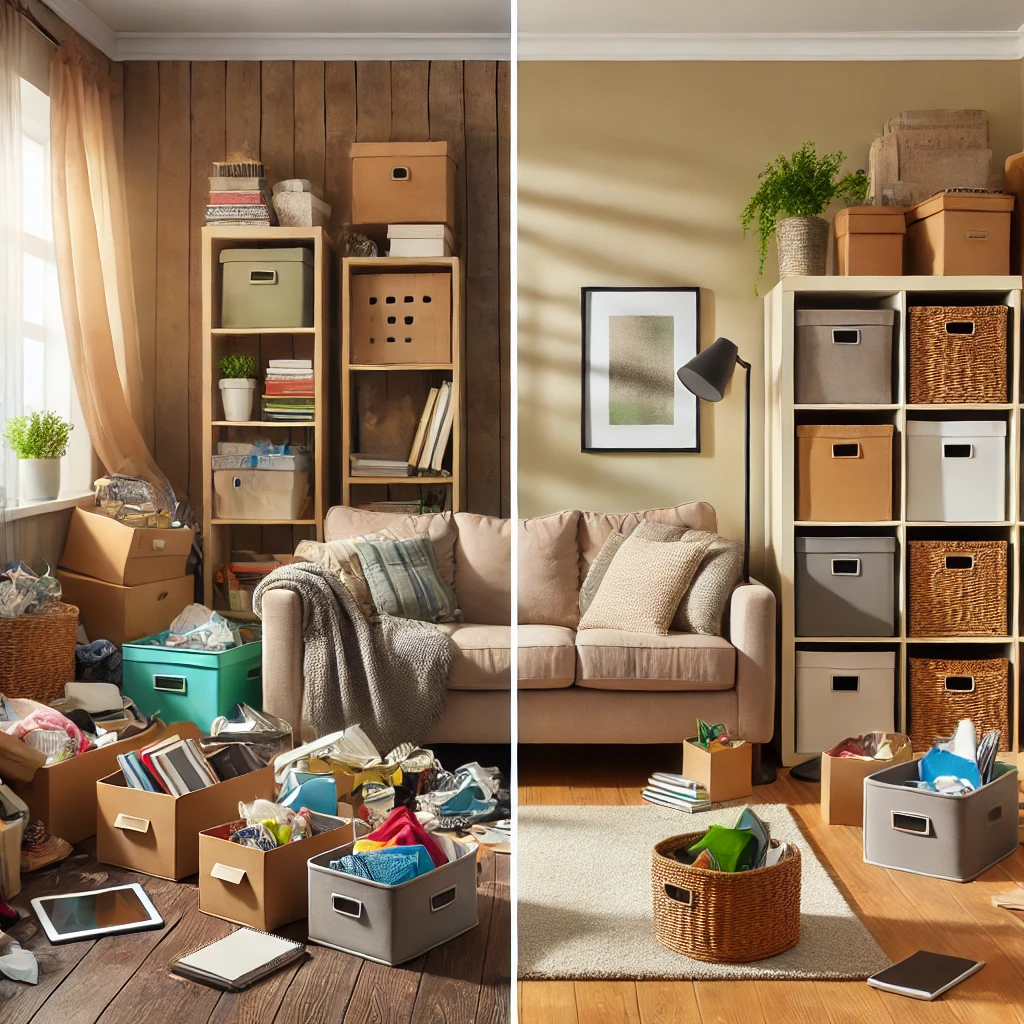
Have you ever spent money on a solution that turned out NOT to be the solution you needed? Did you feel deflated, frustrated, and overwhelmed afterward? You may have wasted money, added to your clutter, and found yourself no closer to solving the problem. In fact, you might even feel worse. Sometimes when I arrive at a client’s home, they proudly show me all the various bins and containers they’ve purchased in anticipation of my arrival. While their intentions are good, this approach often highlights a common cycle many of my clients experience when trying to get organized. Let me illustrate with a scenario I hear often: The Cycle of Frustration “I was so stressed and frustrated with my clutter that one afternoon I dove right into it and started sorting. I created all these piles. At the time, I knew what the piles were for. Then I ran out of time and had to leave to pick up my dog from the vet. A few days later, when I went back to the room, the piles didn’t make sense anymore. Some had merged together because I went digging for an item I needed. It looked worse than before, and I felt discouraged. Later, while shopping, I saw some beautiful containers in my favorite colors. I thought, ‘This is what I need to get organized!’ So, I bought 10 of them and brought them home. When I had some time, I started putting things into the bins. I enjoyed looking at all the items I was discovering, and before I knew it, the two hours I’d set aside were gone. Now I have things half in bins, half scattered, and I’m not even sure what’s in any of the containers.” Does this sound familiar? If it does, let me assure you that you’re not alone—and it’s completely normal. Why Organizing Can Feel Overwhelming Clutter isn’t just about “stuff.” There are often multiple factors contributing to disorganization, and it’s rare for one quick fix to address them all. Here are some common “clutter players” that might be affecting your space: If you’ve purchased bins, books, or gadgets that haven’t solved the problem, step one is to let yourself off the hook. Beating yourself up over wasted time, money, or effort doesn’t help. Instead, ask yourself: What did I learn from this experience? Growth often comes from trial and error. Why Buying Bins First Doesn’t Work Professional organizers approach the process differently. A core tenet in organizing is this: Don’t purchase containers at the start of a project. Here’s why: Often, clients buy containers because it feels like progress. Shopping is fun, while decluttering can be emotionally draining. However, true progress happens when you’ve addressed the deeper causes of clutter and created systems that work for you. The Real Solution: Start With the Process Organizing isn’t about quick fixes—it’s a journey. If you’re tackling a cluttered space, here’s a better approach: Quick Tip: Manage Your Purchases Before buying anything—whether it’s containers or that fancy vegetable slicer at a county fair—ask yourself: Am I prepared to manage this item? Managing means cleaning it, using it, returning it, storing it, or eventually donating it. Most of us would benefit from managing less, not more. The Bottom Line If you’re starting an organizing project, resist the urge to buy containers first. Instead, focus on decluttering, creating systems, and addressing the deeper factors contributing to your clutter. And remember, it’s a process. Be kind to yourself along the way.